
What is shockwave therapy?
Some pain settles down in a few days. Other pain hangs around for months: the heel that hurts with your first steps every morning, the elbow that aches every time you grip a coffee cup, the shoulder that complains whenever you reach overhead. When soft tissue like a tendon or the plantar fascia stays irritated for a long time, it can get "stuck" in a cycle that rest alone does not fix.
Extracorporeal shockwave therapy (often shortened to ESWT or just shockwave) is one tool we use for these stubborn problems. "Extracorporeal" simply means the energy comes from outside the body. There are no needles, no incisions and no medication involved.
How it works, in plain English
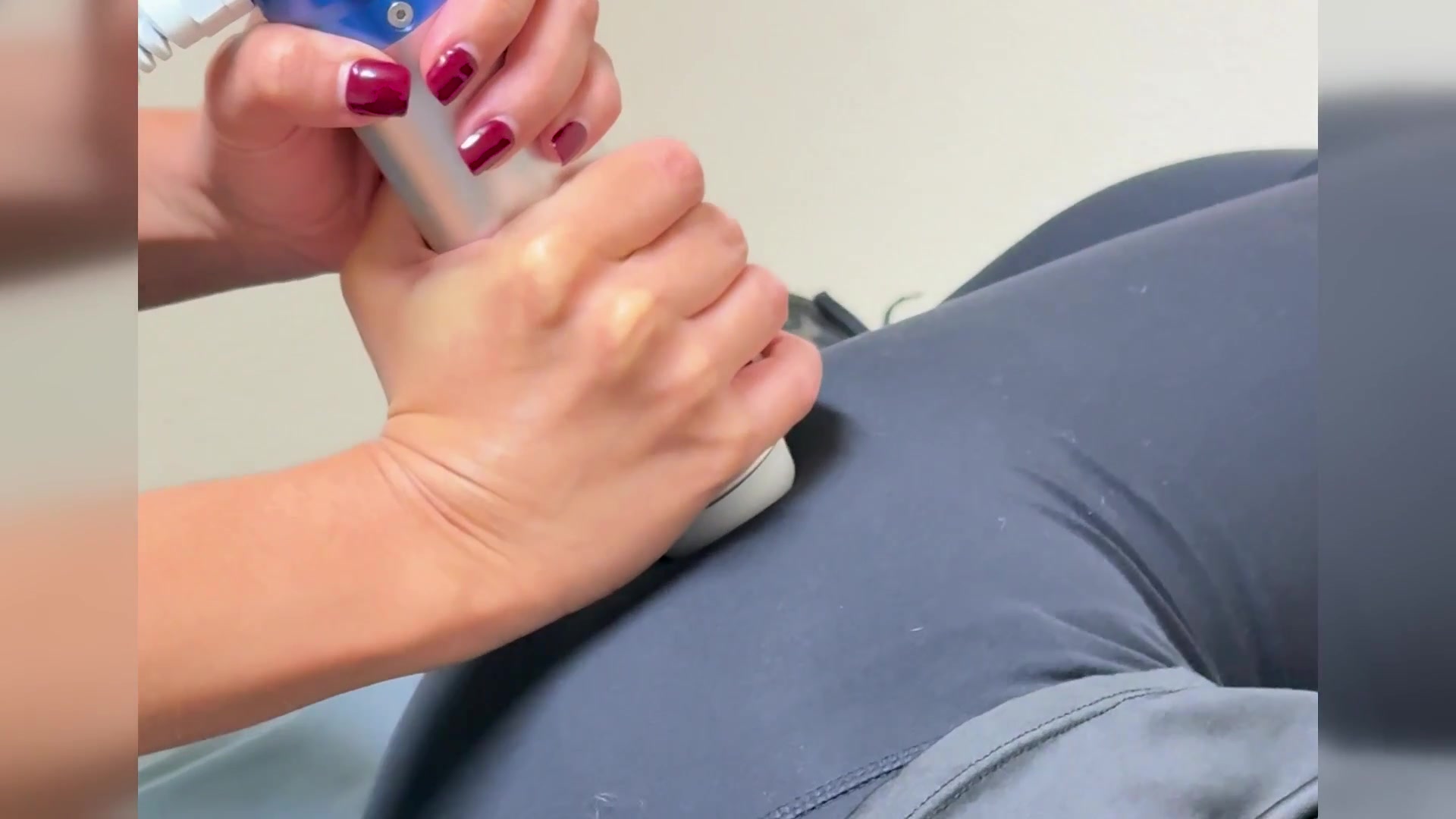
A handheld applicator delivers controlled pulses of acoustic (sound) wave energy through the skin into the irritated tissue. A little gel goes on first so the energy travels smoothly. Those pulses are used to:
- Increase local blood flow to an area that may not be getting much
- Stimulate the body's own repair response in chronically irritated tissue
- Influence pain signaling so the area calms down
- Help break down calcium deposits in certain tendon problems
Think of it as giving a stalled healing process a nudge. It does not replace movement, strength work or good mechanics. It helps the tissue tolerate them again.
Who it may help
At our Tampa office, shockwave is most often considered for long-standing soft-tissue and tendon problems, such as:
- Plantar fasciitis: heel pain, often worst with the first steps in the morning
- Tennis elbow: pain on the outside of the elbow from repeated gripping and lifting
- Achilles tendinopathy: pain and stiffness at the back of the ankle
- Rotator cuff tendinopathy: shoulder pain with reaching or lifting
- Sports and overuse injuries that keep coming back with training
Whether it fits your situation depends on your exam. Results vary from person to person, and we will tell you honestly if another approach makes more sense.
Shockwave is not right for everyone. Tell us if you are pregnant, take blood-thinning medication, have a bleeding disorder, a pacemaker, or a history of cancer, or if there is an infection or open wound near the area. These can rule out treatment over certain areas. Sudden, severe pain after an injury, a visible deformity or inability to bear weight needs urgent care first.
Shockwave vs. high-intensity laser
We also offer high-intensity laser therapy, and patients often ask which one they need. They work differently. Laser uses focused light energy and usually feels like gentle warmth. Shockwave uses acoustic pulses and feels like a strong tapping. Some conditions respond better to one than the other, and some plans use both. The choice depends on the tissue involved and how your body responds.
What a session is like
1. Assessment first
We start with an exam to confirm what is irritated and whether shockwave is a reasonable fit. We also look for the reason it keeps flaring, like training load, footwear, posture or movement patterns.
2. A short treatment
Gel goes on, and the applicator delivers pulses to the area. Many sessions take only a few minutes. The sensation can be noticeable, especially over a sore spot, and the intensity is adjusted to keep you comfortable.
3. Back to your day
There is no planned downtime. Most people return to normal daily activity the same day. Mild soreness or redness in the area for a day or two can happen.
4. Part of a bigger plan
Shockwave usually works best alongside chiropractic care, corrective exercise, massage therapy and smart changes to the activity that caused the problem. The number of sessions depends on your condition and how the tissue responds.
Tips while a tendon is healing
- Keep moving, but scale back the activity that flares it instead of stopping everything.
- Follow the home exercises in your plan. Strength is what makes tendons more resilient.
- Look at your shoes. Worn-out or unsupportive footwear is a common heel-pain culprit.
- Increase training gradually: change one thing at a time.
- Pay attention to pain that wakes you at night or keeps getting worse, and let us know.
Common questions
Does shockwave therapy hurt?
Most people describe a strong tapping or pulsing feeling. It can be mildly uncomfortable over a sensitive spot, but the intensity is controlled throughout the session.
How many sessions will I need?
It varies by condition. We recommend a schedule after your evaluation and adjust it based on how you respond.
How do I find out if it is right for me?
Call 813-265-8555 or book online to schedule an evaluation at our office on Wilsky Blvd in Tampa.
Related care
This article is general health information, not a diagnosis or medical advice. Every patient starts with a history and examination, and we refer to other specialists when a condition falls outside chiropractic care.