
More than "where does it hurt?"
When an athlete walks into a typical office with a sore shoulder or a tight low back, the conversation usually starts and ends with the painful spot. A sports-focused exam goes further. The question is not only where it hurts, but why that area is not keeping up with the work you are asking it to do, and what it will take to get you back to training safely.
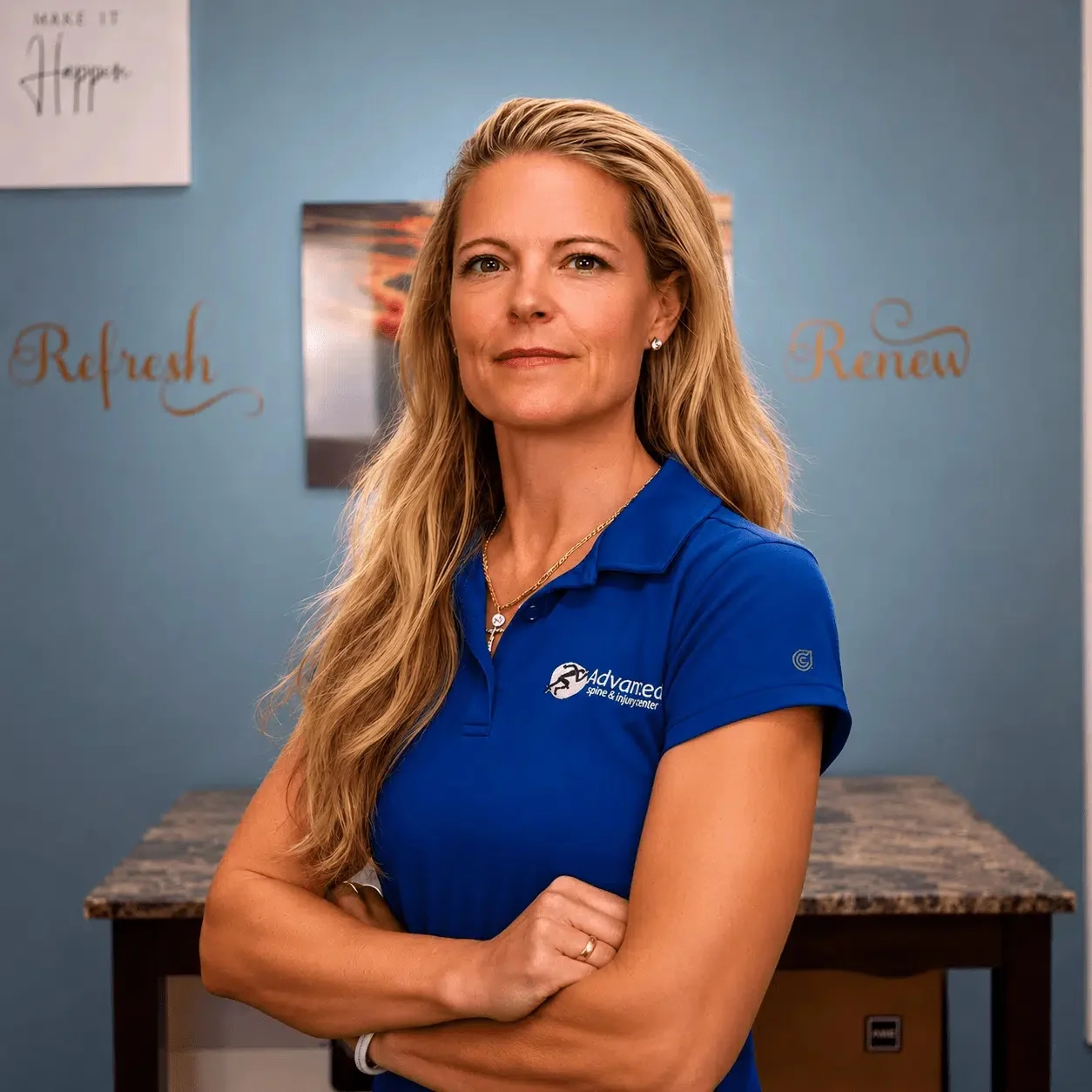
At Advanced Spine & Injury Center, that sports perspective is led by Dr. Theresa Troiani, DC, CCSP. She has treated back and neck pain for more than 25 years, she is a Certified Chiropractic Sports Physician (CCSP), and she competes in triathlons herself, so she knows what it feels like when an injury gets in the way of a goal race or a season.
What "CCSP" means
CCSP stands for Certified Chiropractic Sports Physician. It is a postgraduate sports certification awarded by the American Chiropractic Board of Sports Physicians to doctors of chiropractic who complete additional education and testing in sports-related care. That training focuses on evaluating and managing sports injuries, athletic function and return-to-activity decisions, on top of a chiropractic physician's standard education.
What a sports-focused exam looks at
1. Your sport and your training load
Your sport, how often you train, how hard, and what has changed recently all matter. A runner who added mileage, a lifter who started a new program and a weekend golfer who played three rounds in a row can all show up with similar pain for very different reasons. Overuse injuries often build when training stress grows faster than the body can recover.
2. The movements that bring on symptoms
We want to know exactly what provokes your pain: the push-off in a sprint, the top of a golf swing, the catch phase of a swim stroke, the landing on a tumbling pass. Recreating those positions in the exam helps narrow down which joint or tissue is irritated.
3. The weak link in the chain
Pain in one area is often influenced by another. A stiff mid-back can load the shoulder, and limited hip motion can push extra stress into the low back or knee. The exam checks mobility, strength, control and joint motion above and below the sore spot, not just the spot itself.
4. A clear working diagnosis
Muscle strains and ligament sprains are common in athletes, but more serious problems can look similar at first. Orthopedic and neurological testing helps separate them. If something needs imaging or a referral to another specialist before you return to sport, we will tell you.
5. What you need to get back to
Return to activity is a decision, not a guess. We look at what your sport demands and build a step-by-step plan toward it, so you know what to do now, what to hold off on, and how you will know you are ready for the next step.
Get emergency care first for a suspected head injury or concussion (confusion, vomiting, worsening headache, loss of consciousness), a visible deformity, inability to bear weight, new weakness or numbness, loss of bladder or bowel control, or severe pain that is getting worse quickly. Call 911 or go to the ER. Any athlete with a possible concussion should stop playing for the day and be checked by a medical provider.
Common problems we see in athletes
- Back and neck pain from repeated loading, impact or long hours in one position, like a cyclist in an aero position
- Overuse injuries such as tendon irritation in the shoulder, elbow, knee or heel
- Sprains and strains from sudden twists, sprints or awkward landings
- Sciatica: pain, numbness or tingling that travels from the low back or buttock down the leg
- Pinched nerve in the neck: pain, numbness or tingling that travels into the shoulder, arm or hand
- Extremity joint problems in the shoulders, knees, ankles and wrists
How care fits around your training
Depending on your exam, a plan may combine chiropractic adjustments for the spine and extremity joints, corrective exercise, massage therapy, spinal decompression when appropriate, and high-intensity laser or shockwave therapy for selected tendon and soft-tissue problems such as plantar fasciitis or tennis elbow. You do not always have to stop training completely. Many athletes can keep doing modified training while the underlying problem is addressed. When rest is the better choice, we will say so.
The goal is not just short-term relief. It is helping the injured area tolerate your sport again and reducing the chance that the same overload pattern sends you back next season. Results vary from person to person, and your plan is adjusted as you progress.
Tips for staying in the game
- Increase training volume gradually, and change only one big thing at a time: distance, intensity or frequency.
- Treat recovery as part of training: sleep, hydration, easy days and a real warm-up.
- Pay attention to pain that changes how you move, lingers into the next day or keeps coming back in the same spot.
- Do not "play through" numbness, tingling or weakness. Get it checked.
- Bring your training log or app data to your visit. It helps connect the dots.
Common questions
Do I have to be a competitive athlete?
No. We see runners, cyclists, triathletes, golfers, lifters, gymnasts, cheerleaders, martial artists and weekend warriors. If you train for something you care about, a sports-focused exam can help.
Do I need a referral?
Most patients can schedule directly. If your insurance plan requires a referral, our staff can help you check.
How do I get started?
Call 813-265-8555 or visit our sports and athletic injury page to schedule an athletic evaluation at our Tampa office on Wilsky Blvd.
Related care
This article is general health information, not a diagnosis or medical advice. Every patient starts with a history and examination, and we refer to other specialists when a condition falls outside chiropractic care.