

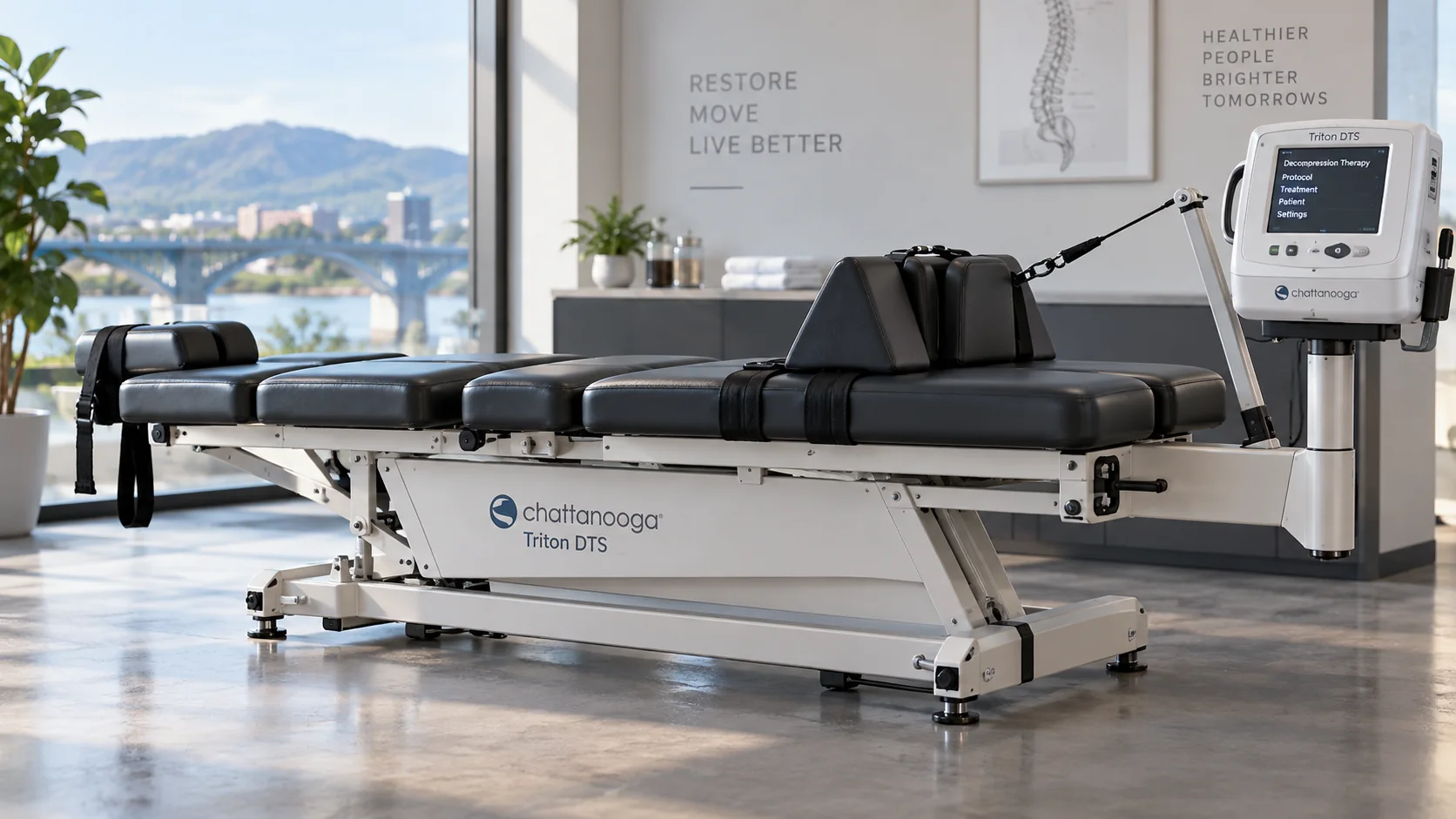
What is spinal decompression?
Non-surgical spinal decompression, also called disc decompression therapy or mechanical traction, uses a computer-controlled table to apply a gentle, measured pull to the low back or neck. The force cycles on and off in a slow rhythm while you lie comfortably supported. The goal is to temporarily reduce the compressive load on discs, joints and irritated nerve roots, which can make movement easier and calm down position-sensitive pain.
It is not the same as hanging upside down or an aggressive stretch. The table adjusts the force gradually, and the session is set to your comfort and how your body responds.
Who it may help
Decompression is one tool, not a cure-all. It is most often considered for mechanical problems that feel worse with sitting, lifting or other compression, such as:
- Bulging or herniated discs in the low back or neck (learn about disc herniations and bulges)
- Sciatica: pain, numbness or tingling that travels from the low back or buttock down the leg, often caused by an irritated nerve root in the lower spine
- Pinched nerve in the neck (cervical radiculopathy): pain, numbness or tingling that travels into the shoulder, arm or hand
- Degenerative disc changes and stiffness that limit how far you can move comfortably
- Neck or low-back pain that eases when the spine is unloaded, for example when lying down
Research on traction and decompression is mixed. Patients tend to do best when it is matched to their exam findings and combined with active care, rather than used on its own. That is how we use it.
When it is not the right choice
Decompression may not be appropriate if you are pregnant, have a recent fracture, a spinal tumor or infection, significant osteoporosis, spinal instability, or surgical hardware such as a fusion in the area being treated. Your exam and health history help us rule these out before any traction is used.
Get emergency care right away for new loss of bladder or bowel control, numbness in the groin or inner thighs, or leg weakness that is quickly getting worse. These are not symptoms to wait on.
What to expect at Advanced Spine & Injury Center
1. An exam first
Your first visit includes a history plus orthopedic and neurological testing. We look at how your symptoms behave in different positions to decide whether unloading the spine is likely to help, and whether imaging or a referral is needed first.
2. A comfortable session
You lie on the table, fully clothed, with a harness or support set for the low back or neck. The force builds slowly, holds, then relaxes in cycles. Most people describe a gentle stretch. If anything feels sharp or worse, the settings are changed or the session is stopped.
3. Part of a bigger plan
Decompression is usually paired with chiropractic care to improve joint motion, plus corrective exercises and everyday advice on sitting, lifting and sleep. Some patients also benefit from high-intensity laser or shockwave therapy or massage.
4. A series of visits, with check-ins
Decompression is typically done over a series of visits spread across several weeks. The exact number depends on your condition and how you respond, and we re-check your progress along the way rather than locking you into a fixed package.
Tips that help between visits
- Break up long periods of sitting with short walks.
- Do the home exercises you are given, even on good days.
- Lift close to your body and avoid twisting while lifting.
- Tell us about any change in numbness, tingling or weakness.
Common questions
Does spinal decompression hurt?
It should not. Most patients find it relaxing. The pull is gradual and set to your comfort.
Is decompression covered by insurance?
Coverage depends on your plan and the reason for care. Our team can check your benefits and explain your payment options before you start.
Do I need an MRI first?
Not always. Many patients start with an exam alone. If your history or exam suggests imaging is needed, we will tell you and help arrange it.
Related care
This article is general health information, not a diagnosis or medical advice. Every patient starts with a history and examination, and we refer to other specialists when a condition falls outside chiropractic care.